Published October 23, 2026
What Is a Short Sale? What Northern Virginia Buyers and Sellers Should Know

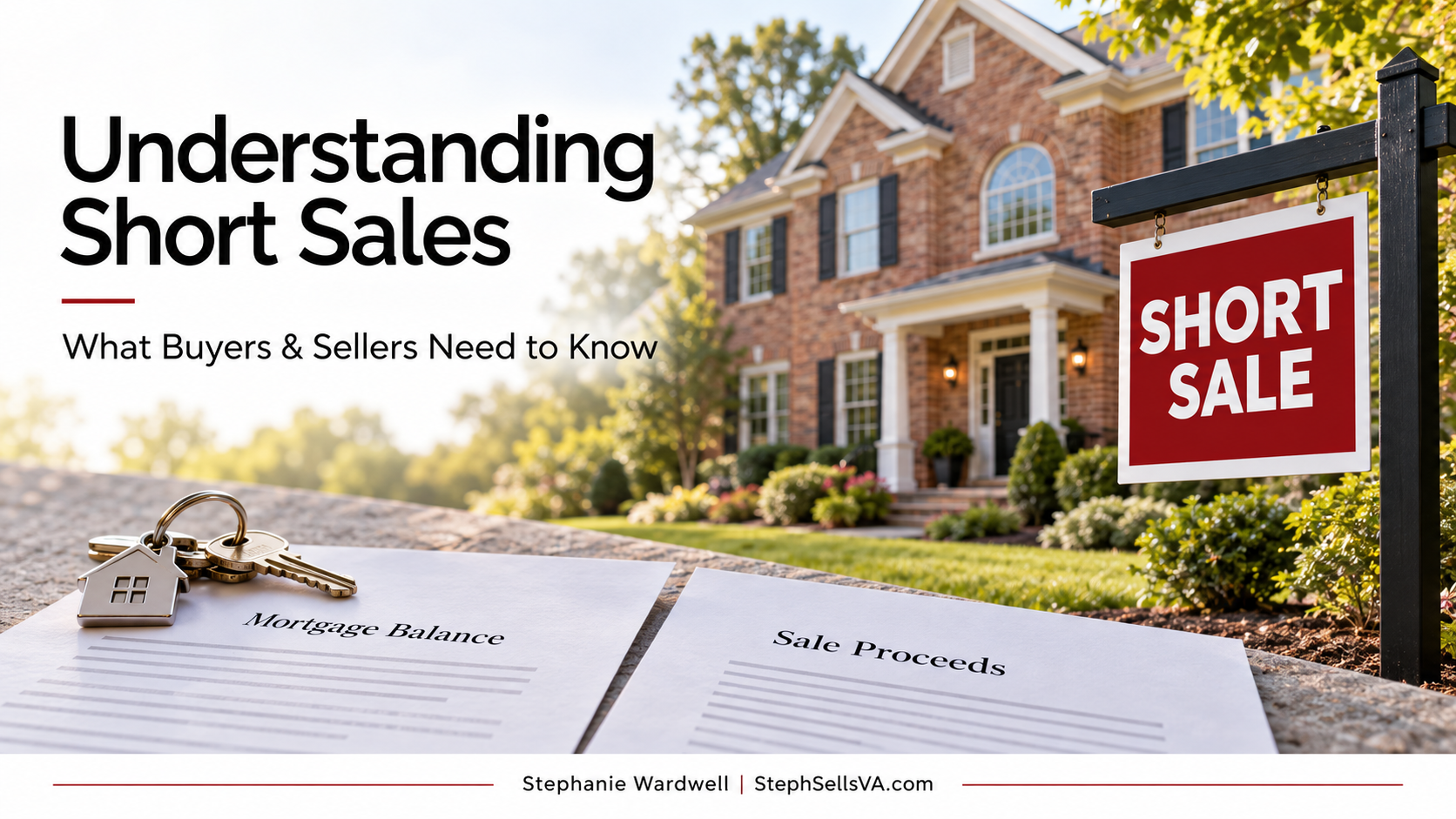
What Is a Short Sale? A Guide for Northern Virginia Buyers and Sellers
A short sale happens when the proceeds from selling a home are not enough to fully pay off the mortgage, and the mortgage holder agrees to accept less to allow the sale.
For sellers, it may offer a way to sell during financial hardship and avoid a completed foreclosure. For buyers, it may create an opportunity to purchase a home—but with extra approval steps and an uncertain timeline.
I helped homeowners list and sell short sale properties in the early 2000s. That experience taught me how important it is to explain the process clearly. Before buying or selling a short sale home in Woodbridge or elsewhere in Northern Virginia, you need to understand the financial details, the approval requirements, and the possible consequences.
How Does a Short Sale Work?
In a typical sale, the mortgage is paid in full at closing. In a short sale, there isn’t enough money available to do that.
Here is a simplified example:
|
Item |
Amount |
|
Mortgage payoff |
$450,000 |
|
Home’s sale price |
$425,000 |
|
Selling expenses |
$25,000 |
|
Amount available to pay the mortgage |
$400,000 |
|
Shortfall |
$50,000 |
The mortgage holder would need to approve accepting the reduced payoff. What happens to the remaining $50,000 depends on the written agreement and applicable rules.
A short sale is different from simply selling for less than you originally paid. You can sell at a loss and still pay off your mortgage in full. The key question is whether the available proceeds cover what must be paid at closing.
What Does the Process Look Like?
The details depend on the loan and the mortgage servicer—the company that handles the payments—but a short sale commonly involves these steps:
- Review the homeowner’s situation. The seller contacts the servicer about available options and short sale requirements.
- Gather the financial information. Depending on the program, the servicer may request hardship information, income records, bank statements, and other documents.
- List the home and negotiate an offer. The contract should address the required short sale approval.
- Submit the proposed sale for review. The servicer reviews the seller’s eligibility, property value, proposed proceeds, and other requirements.
- Resolve the approval terms and liens. Other mortgage holders or lienholders may also need to agree to a reduced payoff or release.
- Complete the purchase. Once the necessary approvals are obtained, the parties must meet the contract requirements and the approval letter’s closing deadline.
The seller accepting an offer is an important step. It does not guarantee that the mortgage holder will approve the transaction.
How Can a Short Sale Affect Sellers?
It May Provide an Alternative to Foreclosure
For an eligible homeowner who needs to sell, a short sale may offer a way to avoid a completed foreclosure.
However, a listing or purchase offer alone does not automatically stop a foreclosure sale. If foreclosure is already underway, the homeowner should promptly contact the servicer and an attorney about deadlines and available protections.
It Can Affect Credit and Future Borrowing
A short sale can hurt the seller’s credit. Missed mortgage payments leading up to the sale can also cause damage.
There is no single credit score drop that applies to everyone. The effect depends on the homeowner’s credit history and how the account is reported.
Qualifying for another mortgage afterward depends on the loan program, lender requirements, and the borrower’s circumstances. Sellers should get individual guidance before making plans to buy again.
The Remaining Debt May Not Automatically Disappear
This is one of the most important questions to ask:
Does this approval release me from the remaining debt, or does it only release the lien so the home can be sold?
Those are different things.
A seller should have an attorney review the approval terms, including any deficiency waiver, required cash contribution, or continuing repayment obligation. If there is more than one mortgage, each creditor’s terms need attention.
Forgiven Debt May Have Tax Consequences
For a new short sale in 2026, homeowners should not assume that forgiven mortgage debt is tax-free.
Current IRS guidance limits the qualified principal residence debt exclusion to debt discharged before January 1, 2026, or discharged under an arrangement entered into and documented in writing before that date.
Other exclusions, including bankruptcy or insolvency, may apply. A CPA can determine whether the homeowner qualifies and what reporting is required.
Get that advice early so a possible tax bill is part of the decision.
How Can a Short Sale Affect Buyers?
Approval Can Take Longer Than a Typical Sale
The mortgage holder needs to review the proposed transaction. Approval can take months, and there is no universal closing timeline.
A short sale may be difficult for someone with a firm lease expiration, a scheduled home sale, or a military reporting date. Buyers should have a backup housing plan if timing is tight.
The Asking Price Is Not Guaranteed to Be Approved
A short sale listing price does not necessarily mean the mortgage holder has agreed to accept that amount.
Even after the seller accepts an offer, the mortgage holder may reject it or request a higher price or different terms.
Compare the property with similar homes and consider its condition before deciding what to offer.
Repairs and Credits May Be Limited
A seller facing financial hardship may have little money available for repairs. The approving mortgage holder may also limit permitted expenses or concessions.
A home inspection helps buyers understand the condition and potential repair costs. The contract determines the buyer’s inspection rights and deadlines.
If the buyer is financing the purchase, the property must also meet the buyer’s loan requirements. Discuss significant condition issues with the lender early.
Waiting for short sale approval does not mean every other deadline automatically waits too.
Before signing, buyers should understand:
- When inspections must be completed.
- When financing deadlines apply.
- How long they are agreeing to wait for approval.
- When they may terminate the contract.
- What happens to the earnest money if the sale does not proceed.
- Whether a mortgage rate lock could expire during the wait.
These details should be clearly addressed in the contract and reviewed with the appropriate professionals.
In a short sale, the homeowner still owns the property and is selling it with approval to pay less than the full mortgage balance.
Foreclosure is the legal process used to enforce the mortgage after default. A bank-owned property is a home the lender has acquired, often following foreclosure.
The ownership, approval process, and purchase terms can be different in each situation.
What Should Military Families Know?
Military families facing a PCS move may have loan-specific short sale provisions worth exploring. Eligibility depends on the mortgage program and the circumstances.
For homeowners with a VA-backed loan, a short sale can affect future VA loan entitlement. VA states that repayment of its loss is necessary to restore the affected benefit. Ask a VA loan technician how the proposed sale could affect your entitlement before deciding.
Questions to Ask Before Moving Forward
If you are selling:
- What options does my servicer offer?
- What is the total payoff for every mortgage and other lien?
- Will any remaining debt be waived in writing?
- Am I required to contribute money?
- What are the possible credit and tax consequences?
- Is there a foreclosure deadline?
If you are buying:
- Has the mortgage holder already approved a price, or is approval still needed?
- Which creditors must approve the sale?
- How long does the contract require me to wait?
- What are my inspection and cancellation rights?
- Can the home qualify for my financing?
- What is my backup plan if closing is delayed?
Planning Your Next Move in Northern Virginia
A short sale can be a useful option in the right situation. It requires patience, careful paperwork, and a clear understanding of the approval terms.
My role is to help you understand the real estate process, evaluate the property and pricing, and coordinate with the professionals involved. Your attorney, CPA, and lender can address the legal, tax, and financing questions specific to you.
If you are considering buying or selling a short sale home in Woodbridge, Lake Ridge, Manassas, or elsewhere in Northern Virginia, contact the Stephanie Wardwell Real Estate Team at 703-472-9633 or Stephanie@StephanieWardwell.com
We’ll start with your situation, your timeline, and the questions you need answered.

Stephanie Wardwell
| Stephanie Wardwell | Keller Williams
or another way